
Key findings at a glance
- A warranty covers water ingress through the treated area caused by failure of the applied system — not every subsequent leak in the building.
- Manufacturer warranties cover the material; applicator warranties cover the installed system. Most failures are workmanship, so the second is the one that matters.
- Every genuine warranty has exclusions. A document with none listed has undisclosed ones.
- Transferability on sale is not automatic in India and is worth negotiating in writing at quotation stage.
- Photographic records, thickness readings and a water test result at handover are what make a claim straightforward years later.
Ten-year waterproofing warranties are widely offered in Pune and widely misunderstood. This guide sets out what such a document reasonably covers, what it reasonably excludes, and which clauses are worth reading closely before you approve an estimate.
What a warranty is, in practice
A waterproofing warranty is a written undertaking that if water penetrates the treated area during the stated term, because the applied system failed, the contractor will make it good at no cost. Three qualifiers in that sentence do the work: the treated area, during the stated term, and because the applied system failed. Most disputes turn on one of the three.
The two kinds of warranty, and why the distinction matters
| Aspect | Manufacturer warranty | Applicator warranty |
|---|---|---|
| What is covered | The material meets its published specification | The installed system keeps water out |
| Covers workmanship | No | Yes |
| Covers labour to re-do work | No — material replacement only | Yes, within the stated terms |
| Typical trigger | Proven material defect | Water ingress through the treated area |
| Who you claim from | The manufacturer, usually via the applicator | The contractor directly |
| Practical value | Limited — material defects are rare | High — most failures are workmanship |
The distinction matters because the overwhelming majority of waterproofing failures are not material failures. They are inadequate preparation, insufficient thickness, missed junction detailing, or compressed curing. A manufacturer warranty pays out on none of those. When a contractor says “it comes with a ten-year warranty”, the useful follow-up is: whose warranty, and does it cover the labour to put it right?
Exclusions that are reasonable
A well-drafted warranty will exclude the following, and these exclusions are fair:
- Structural movement beyond the system’s rated capability — a coating rated to bridge 2 mm cannot be blamed for a 10 mm settlement crack.
- Third-party breach — a subsequent contractor drilling through the membrane to fix a railing, an antenna or a solar mount.
- Change of use — adding a water tank, a planter box or heavy traffic to a surface specified for none of those.
- Lack of maintenance — blocked rainwater outlets causing ponding is the classic example, and it is genuinely the owner’s responsibility.
- Ingress from an untreated area — water entering the flat below from a neighbour’s untreated bathroom is not a failure of your terrace.
Not sure what your property needs?
Book a free deep-scan inspection. We map the moisture, trace where the water actually enters, and give you a written report with a fixed estimate — at no cost and with no obligation.
Clauses worth negotiating before you sign
Transferability
Warranties in India do not transfer automatically on sale. For a flat owner planning to sell, or a society with turnover among members, a transferability clause is one of the highest-value things to ask for and usually costs nothing to include.
Response time
A warranty that promises repair without stating a response time can be honoured slowly enough to be worthless during a monsoon. Ask for a stated period for inspection after a reported leak.
Partial versus full remediation
Does the warranty cover repair of the failed section, or re-treatment of the affected area? For a large terrace the difference is substantial, and it should be explicit.
What survives a partial claim
If a section is repaired in year four, does the original ten-year term continue on the rest, and what term applies to the repaired section? Well-drafted documents answer this; most do not.
The records that make a claim easy
Warranty claims years after the work are won or lost on documentation. At handover, ask for and keep:
- Photographs of the substrate after preparation and before the first coat
- Photographs of junction, upstand and penetration detailing before over-coating
- Dry film thickness readings, if a gauge was used
- The water or hold test result, dated and signed
- Product data sheets and batch details for the materials used
- The signed warranty document itself, with exclusions
A contractor who provides this set as a matter of course is a contractor whose work will stand up to the scrutiny. One who cannot produce any of it after the event is in a weak position to defend the work — and so are you.
What we do
Eligible completed projects carry a written ten-year warranty on the treated area. The work is water-tested in front of you before handover, and the exclusions are stated on the estimate before you approve it rather than disclosed at claim stage. The full credentials and compliance position is set out separately.
Want work that carries a written 10-year warranty?
Frequently asked questions
What does a 10-year warranty actually cover?
Water ingress through the treated area arising from failure of the applied system, for the stated term, subject to disclosed exclusions.
Manufacturer or applicator warranty — which do I want?
The applicator warranty, because it covers workmanship, and most failures are workmanship. Ideally both.
Does the warranty transfer if I sell?
Only if the document says so. Negotiate it in writing at quotation stage.
Book your free waterproofing inspection
Leakproofs by Betterwork works across Pune and Pimpri-Chinchwad. An engineer visits at a time that suits you, deep-scans the affected area, and hands you a written report and fixed price. Eligible work carries a 10-year warranty.
Related guides
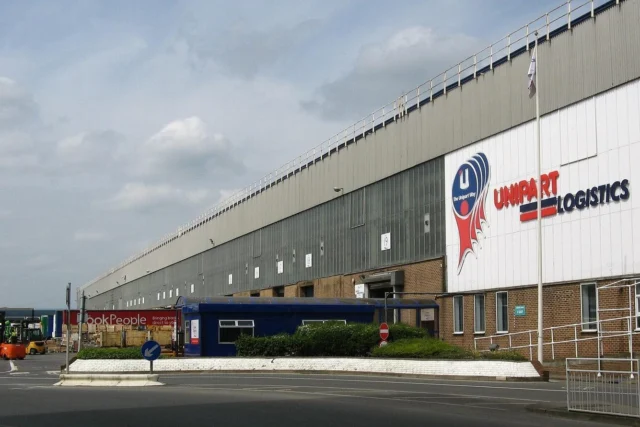
A 30-Day Monsoon Readiness Plan for Pune and PCMC Commercial Premises
A four-week pre-monsoon plan for offices, warehouses, factories and retail in Pune and PCMC, plus the four failure points behind…
Learn more
What Leaks at 5, 15 and 30 Years: A Building Age Timeline for Pune and PCMC
Buildings do not leak randomly. What fails at 5, 15 and 30 years in Pune and PCMC, what is still…
Learn more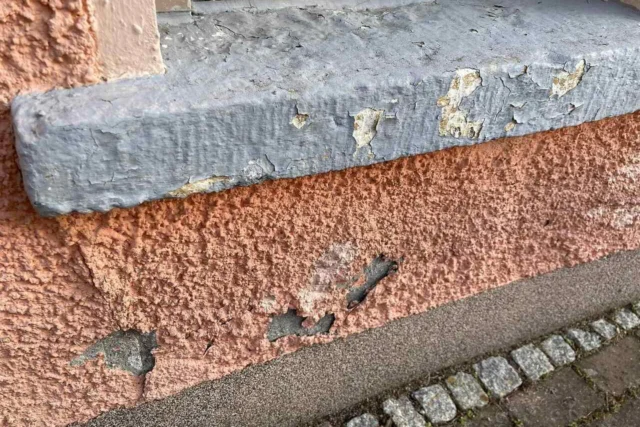
Damp in a Rented Flat: Tenant and Landlord Responsibilities in Pune
Who fixes damp in a rented Pune flat, what tenants must do on day one to protect the deposit, and…
Learn moreExplore related services and areas
Our services
- Terrace Waterproofing
- Roof Waterproofing
- Bathroom Waterproofing
- Wall Waterproofing
- Basement Waterproofing
- Water Tank Waterproofing
- Balcony Waterproofing
- Swimming Pool Waterproofing
Specialist treatments
- Terrace Waterproofing
- Bathroom & Toilet Waterproofing
- Basement & Underground Tank Waterproofing
- External & Internal Wall Leakage Treatment
- PU & Epoxy Coating Waterproofing
- Injection Grouting (Pressure / Chemical)
- Dampness & Seepage Treatment
- Monsoon Pre-Inspection & Leakage Detection