
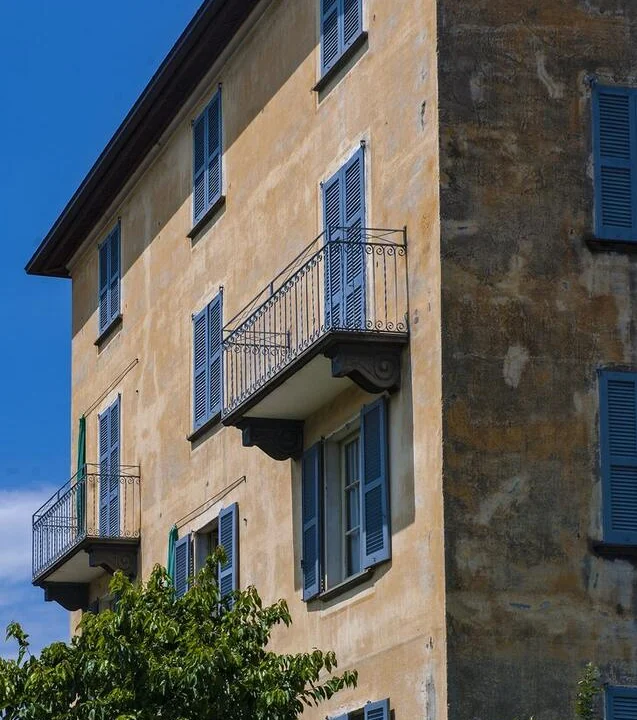
Key findings at a glance
- The threshold step is the most common cause of water entering the room behind a balcony.
- Re-tiling over old tiles removes the step and is a frequent cause of new leaks in older flats.
- A single outlet with no overflow means one blockage floods the balcony to threshold height.
- Water entering the slab travels laterally and emerges in the flat below, which is why disputes arise.
- A survey usually distinguishes a detail failure, which is cheap, from a membrane failure, which is not.
Balconies are small, and they produce a disproportionate share of the leakage complaints in Pune high-rises. The reason is that a balcony concentrates every difficult waterproofing detail — a threshold, a single drainage point, a perimeter junction, a railing fixed through the slab — into a few square metres.
The threshold, and why it matters most
For a balcony to keep water out of the room behind it, two things must be true. The finished balcony level must sit below the internal floor level, conventionally by at least 25 mm. And the waterproofing membrane must turn up at the door and be dressed behind the frame, so that water reaching the threshold meets a barrier rather than a joint.
In practice, the step is what gets lost. When a balcony is re-tiled, the common approach is to lay new tiles over the old ones, which raises the finished level by 20 to 30 mm and eats the entire step. The balcony is now level with the room, or above it. From that moment, any water that does not drain away within seconds runs inside, and no amount of sealant along the door frame changes the geometry.
Drainage: one outlet is a single point of failure
Most balconies drain through one outlet. If it blocks — and balcony outlets block routinely, with leaves, cement debris from a neighbour’s renovation, or a stray cloth — the balcony fills to the height of its lowest escape route, which is the threshold. A balcony that ponds for an afternoon during heavy rain is being tested at the exact detail that is least able to resist it.
Two corrections address this. An overflow or scupper set slightly below threshold level gives water a second route out, so a blockage produces a stain on the facade rather than water in the bedroom. And a raised grating over the outlet, cleared as routine maintenance, prevents most blockages in the first place.
Not sure what your property needs?
Book a free deep-scan inspection. We map the moisture, trace where the water actually enters, and give you a written report with a fixed estimate — at no cost and with no obligation.
Where balcony leaks actually originate
| Source | Where it shows | Treatment | Requires lifting tiles? |
|---|---|---|---|
| Threshold too high / no step | Room floor wet after rain | Rebuild threshold, dress membrane behind frame | Locally only |
| Blocked or high-set outlet | Ponding; water at threshold | Reset outlet below finished level; add overflow | Locally only |
| Perimeter junction at wall | Damp at the wall base inside | Cut, tape and re-seal the junction | Locally only |
| Railing fixings through the slab | Damp spots below the railing line | Seal fixings with collars; ideally side-fix instead | Locally only |
| Failed membrane under tiles | Diffuse damp on the ceiling below | Strip and re-waterproof | Yes, the full area |
| Cracked slab / structural movement | Crack visible; damp follows the crack line | Injection and repair, then re-waterproof | Yes |
The first four rows are all detail failures, and all four can be corrected without lifting the field of the balcony. That is why a survey before opening up matters so much here — the difference in cost between correcting a threshold and re-waterproofing a balcony is several-fold, and the symptoms overlap enough that guessing is expensive.
The dispute problem in societies
Because a leaking balcony shows up in the flat below, balcony leaks in Pune societies routinely become disputes between neighbours. The technical position is straightforward and worth stating plainly: water entering the slab from the upper balcony travels laterally and emerges below. Treating the lower ceiling closes the exit and leaves the entry open, which is why those repairs fail and the leak often reappears in a slightly different spot.
An independent survey helps here more than argument does. A moisture map showing the wet zone in the slab and its gradient generally makes the source uncontroversial, and gives the committee something factual to act on.
Doing it properly, if the tiles do come up
Where the membrane has failed and the balcony must be stripped, the sequence is: remove tiles and screed to the structural slab; repair any spalled concrete and treat exposed reinforcement; form falls to the outlet in a fresh screed; prime; apply a crack-bridging membrane with fabric reinforcement at the perimeter junction, the threshold and around the outlet and any fixings; set the outlet below finished level with the membrane clamped into it; flood-test; then lay the finish, keeping the finished level at least 25 mm below internal floor level.
Railings are worth a specific decision at this stage. Balustrades bolted down through the slab create permanent penetrations at the wettest edge of the balcony. Where the design allows, side-fixing to the slab edge instead removes those penetrations entirely.
Balcony leaking into the room or the flat below?
Frequently asked questions
Why does water come in from the balcony?
Usually the threshold. The balcony must sit at least 25 mm below internal floor level, with the membrane dressed behind the door frame.
My neighbour’s balcony leaks into my flat — whose problem is it?
Technically the upper balcony’s. Treating the ceiling below closes the exit and leaves the entry open.
Can it be fixed without removing tiles?
Often yes, if the cause is the threshold, the outlet, the perimeter or the railing fixings. A survey establishes which before anything is lifted.
Book your free waterproofing inspection
Leakproofs by Betterwork works across Pune and Pimpri-Chinchwad. An engineer visits at a time that suits you, deep-scans the affected area, and hands you a written report and fixed price. Eligible work carries a 10-year warranty.
Related guides

What Leaks at 5, 15 and 30 Years: A Building Age Timeline for Pune and PCMC
Buildings do not leak randomly. What fails at 5, 15 and 30 years in Pune and PCMC, what is still…
Learn more
Mould and Fungus After the Monsoon: Removing It So It Does Not Return
Why mould returns every Pune monsoon, how to tell condensation growth from leak growth, and the six-step removal sequence that…
Learn more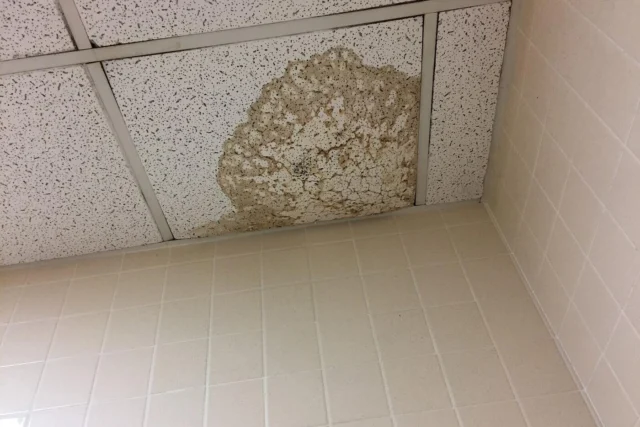
Ceiling Leak from the Flat Above: Who Pays, and How to Get It Fixed
Water dripping from the flat above? How to trace the real source, what your society bye-laws say about who pays,…
Learn moreExplore related services and areas
Our services
- Terrace Waterproofing
- Roof Waterproofing
- Bathroom Waterproofing
- Wall Waterproofing
- Basement Waterproofing
- Water Tank Waterproofing
- Balcony Waterproofing
- Swimming Pool Waterproofing
Specialist treatments
- Terrace Waterproofing
- Bathroom & Toilet Waterproofing
- Basement & Underground Tank Waterproofing
- External & Internal Wall Leakage Treatment
- PU & Epoxy Coating Waterproofing
- Injection Grouting (Pressure / Chemical)
- Dampness & Seepage Treatment
- Monsoon Pre-Inspection & Leakage Detection