
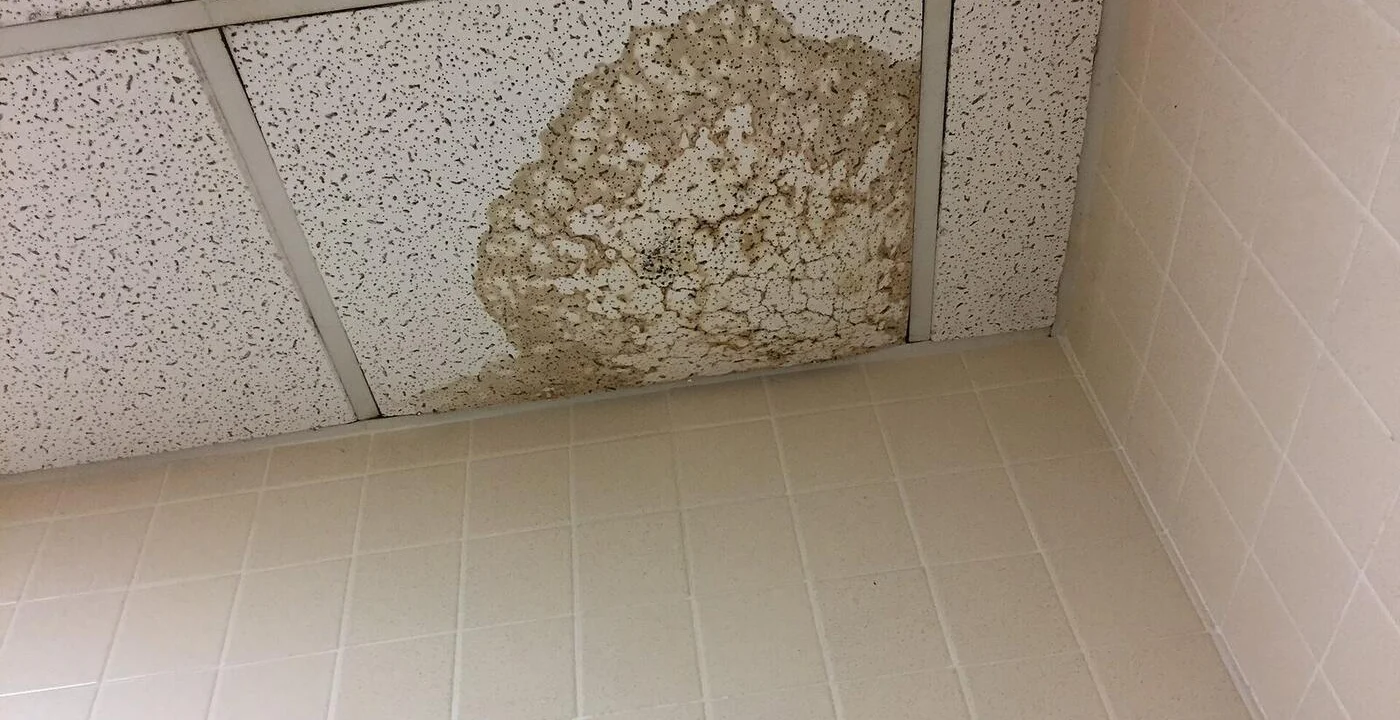
Key findings at a glance
- Waterproofing very rarely fails in the middle of a surface. It fails at junctions, penetrations and cracks.
- Failure within one monsoon indicates preparation or application error; failure at year six to eight usually indicates normal end of service life.
- Applying a coating over a damp substrate is the single most common cause of blistering and delamination.
- A rigid system on a moving substrate will crack regardless of brand or price — chemistry must match movement.
- Ponding converts a minor defect into a leak, and correcting falls is usually cheaper than upgrading the coating.
Waterproofing failures look varied and are not. Nearly all of them reduce to seven mechanisms, and each leaves distinguishable evidence on site. Being able to tell them apart matters because the correct remedy differs sharply — and because treating the wrong mechanism is how buildings end up being waterproofed three times.
The seven modes
| Mode | What you see | Typical timing | Correct remedy |
|---|---|---|---|
| 1. Adhesion failure | Coating lifting in sheets; clean substrate underneath | Months to 2 years | Strip, prepare correctly, reapply |
| 2. Under-thickness | Coating intact but worn through at high points | 1 – 3 years | Recoat to specified DFT after preparation |
| 3. Detail omission | Leak traced to a parapet, pipe or outlet; field is sound | First monsoon | Detail the junction; no need to redo the field |
| 4. Movement mismatch | Cracks in the coating mirroring cracks in the slab | 1 – 4 years | Reinforced band or elastic system at the crack |
| 5. Substrate failure | Spalling concrete, exposed corroded reinforcement | 2 – 6 years | Concrete repair first, then waterproof |
| 6. Ponding-driven breach | Leak beneath a permanent puddle; silt ring visible | Any time | Correct falls and outlets, then treat |
| 7. End of service life | Uniform chalking, embrittlement, loss of elasticity | 5 – 15 years by system | Planned renewal |
Mode 7 is not a failure at all, and it is worth naming as a separate category because it is routinely mistaken for one. A coating that has served eight years and is now chalking has done its job. Treating that as a contractor failure rather than a scheduled renewal is how societies end up in avoidable disputes.
Mode 1: adhesion failure
The signature is a coating that lifts away in continuous sheets with a clean, uncoated substrate underneath. That tells you the coating never bonded, which points at the surface it went onto: dust and laitance not removed, residual moisture in the slab, or a primer omitted or under-applied. PU and epoxy systems are the least forgiving here, since both are intolerant of substrate moisture. A moisture reading before application prevents this entirely, and takes minutes.
Mode 2: under-thickness
The coating is bonded and continuous but has worn through at high points and traffic paths well before its rated life. This is the commercial failure mode: the same product applied at half the specified dry film thickness costs the applicator half as much in material and is visually indistinguishable once cured. It is the reason a quotation should state DFT in microns and the reason a gauge reading at handover is worth requiring.
Mode 3: detail omission
The most common of all. The field of the terrace is sound; the leak traces back to a parapet junction, a pipe penetration, a rainwater outlet or a construction joint. This is good news commercially, because the remedy is to detail the junction properly rather than redo the whole area. It is also the mode most cheaply prevented, since corner tape, pipe collars and drain seals are a small fraction of a terrace budget.
Not sure what your property needs?
Book a free deep-scan inspection. We map the moisture, trace where the water actually enters, and give you a written report with a fixed estimate — at no cost and with no obligation.
Mode 4: movement mismatch
Cracks in the coating that mirror cracks in the slab beneath mean a rigid system was asked to span a moving substrate. No amount of quality control on the application prevents this; it is a specification error. A Pune terrace cycles daily between strong afternoon sun and night cooling, and any system on it must accommodate that movement — either through inherent elasticity, or through a reinforced band over the known movement lines.
Mode 5: substrate failure
Where reinforcement has begun to corrode, expanding rust generates pressure that spalls the cover concrete off, taking any coating with it. Waterproofing over this is spending money on a surface that is actively disintegrating. The sequence is not negotiable: break out to sound concrete, expose and clean the steel behind as well as in front, prime it, reinstate the section with a repair mortar, and only then waterproof.
Mode 6: ponding-driven breach
Look for silt rings on the terrace after it dries — they mark exactly where water stands. Standing water applies sustained pressure at one point for weeks and keeps the surface saturated, so a defect that would be trivial on a draining terrace becomes a route. Correcting falls and re-setting outlets below finished level is inexpensive relative to the coating, and it lengthens the life of whatever system is applied. On most terraces we inspect it is the highest-return single intervention available.
Reading the timing
Timing alone narrows the diagnosis considerably. A leak in the first monsoon after work points at modes 1, 3 or 6 — preparation, detailing or drainage. A failure at two to four years points at modes 2 or 4 — thickness or movement. Deterioration at five to fifteen years, distributed evenly, is mode 7 and is simply the system reaching the end of its life. Asking when the work was done is often more diagnostic than looking at the stain.
Waterproofing failed and you want to know why?
Frequently asked questions
Why does waterproofing fail after one year?
Almost always preparation or application: a coating over a damp or dusty substrate, applied thinner than specified, or with junctions left undetailed.
Is failure the material’s fault or the contractor’s?
Usually specification or workmanship. Established brands rarely fail to meet their published specification; the mismatch is between product and situation, or in the execution.
Can ponding cause waterproofing to fail?
Yes — it is among the most common causes in Pune. Correct the falls and outlets before upgrading the coating.
Book your free waterproofing inspection
Leakproofs by Betterwork works across Pune and Pimpri-Chinchwad. An engineer visits at a time that suits you, deep-scans the affected area, and hands you a written report and fixed price. Eligible work carries a 10-year warranty.
Related guides
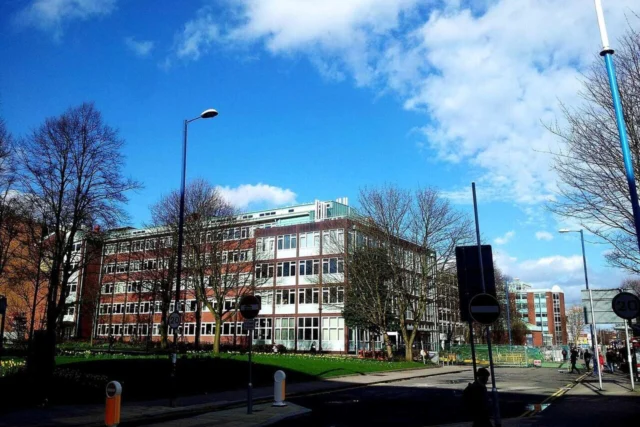
What Leaks at 5, 15 and 30 Years: A Building Age Timeline for Pune and PCMC
Buildings do not leak randomly. What fails at 5, 15 and 30 years in Pune and PCMC, what is still…
Learn more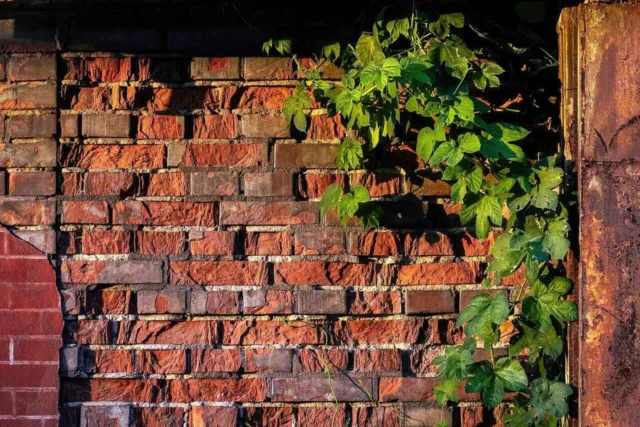
Mould and Fungus After the Monsoon: Removing It So It Does Not Return
Why mould returns every Pune monsoon, how to tell condensation growth from leak growth, and the six-step removal sequence that…
Learn more
Ceiling Leak from the Flat Above: Who Pays, and How to Get It Fixed
Water dripping from the flat above? How to trace the real source, what your society bye-laws say about who pays,…
Learn moreExplore related services and areas
Our services
- Terrace Waterproofing
- Roof Waterproofing
- Bathroom Waterproofing
- Wall Waterproofing
- Basement Waterproofing
- Water Tank Waterproofing
- Balcony Waterproofing
- Swimming Pool Waterproofing
Specialist treatments
- Terrace Waterproofing
- Bathroom & Toilet Waterproofing
- Basement & Underground Tank Waterproofing
- External & Internal Wall Leakage Treatment
- PU & Epoxy Coating Waterproofing
- Injection Grouting (Pressure / Chemical)
- Dampness & Seepage Treatment
- Monsoon Pre-Inspection & Leakage Detection