
“Can you fix it without breaking my tiles?” is the first question almost every customer asks. The honest answer is: sometimes — and it depends entirely on where the water is coming from.
Where bathroom leaks actually start
In most Pune flats the bathroom sits on a sunk slab — a recessed portion filled with material that carries the concealed plumbing. Leaks come from three places:
- Failed waterproofing in the sunk portion, so water that gets past the tiles sits in the fill and finds the slab
- Concealed plumbing joints that have started weeping
- Tile grout and the floor-wall junction, letting water through into the fill
The symptom is nearly always the same: a damp patch on the ceiling of the flat below, often near a corner.
When a no-demolition repair works
If the inspection shows the sunk fill is sound and the problem is confined to grout and the floor-wall junction, then chemical grouting and a surface-applied treatment can work. This is genuine, not a compromise — but it only holds when the underlying waterproofing is intact.
Injection grouting can also seal specific cracks in the slab from below in some cases, without touching the bathroom at all.
When tiles have to come up
If the sunk-slab waterproofing has failed, or a concealed pipe joint is leaking, no surface treatment will hold. The fill has to be opened, the plumbing repaired if needed, a fresh membrane applied across the slab and turned up the walls, and the area flood-tested before refilling.
Anyone promising a permanent fix for a failed sunk slab without opening it is selling you next year’s repeat visit.
Not sure what your property needs?
Book a free deep-scan inspection. We map the moisture, trace where the water actually enters, and give you a written report with a fixed estimate — at no cost and with no obligation.
How we tell the difference
Deep-scan moisture mapping shows whether the wet zone follows the plumbing run or spreads evenly from the sunk area, which usually distinguishes a pipe leak from failed waterproofing. We put this in the inspection report before quoting, so you can see the reasoning rather than take the recommendation on trust.
How long it takes
A grouting-based repair is typically one to two days. A full sunk-slab treatment needs the bathroom out of use for around five to seven days including curing and testing. We tell you which before starting, in writing.
Stop bathroom seepage at its source.
Book your free waterproofing inspection
Leakproofs by Betterwork works across Pune and Pimpri-Chinchwad. An engineer visits at a time that suits you, deep-scans the affected area, and hands you a written report and fixed price. Eligible work carries a 10-year warranty.
Related guides

What Leaks at 5, 15 and 30 Years: A Building Age Timeline for Pune and PCMC
Buildings do not leak randomly. What fails at 5, 15 and 30 years in Pune and PCMC, what is still…
Learn more
Mould and Fungus After the Monsoon: Removing It So It Does Not Return
Why mould returns every Pune monsoon, how to tell condensation growth from leak growth, and the six-step removal sequence that…
Learn more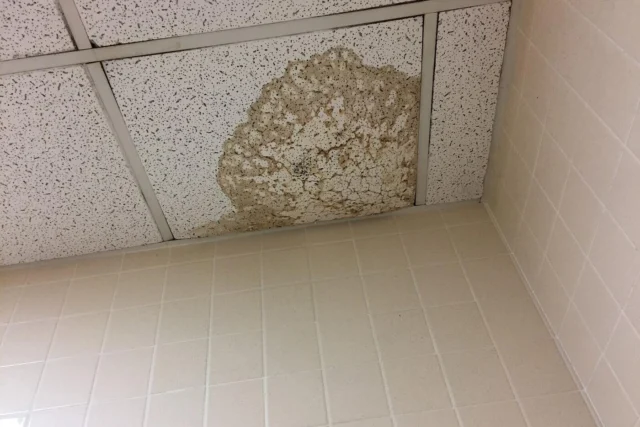
Ceiling Leak from the Flat Above: Who Pays, and How to Get It Fixed
Water dripping from the flat above? How to trace the real source, what your society bye-laws say about who pays,…
Learn moreExplore related services and areas
Our services
- Terrace Waterproofing
- Roof Waterproofing
- Bathroom Waterproofing
- Wall Waterproofing
- Basement Waterproofing
- Water Tank Waterproofing
- Balcony Waterproofing
- Swimming Pool Waterproofing
Specialist treatments
- Terrace Waterproofing
- Bathroom & Toilet Waterproofing
- Basement & Underground Tank Waterproofing
- External & Internal Wall Leakage Treatment
- PU & Epoxy Coating Waterproofing
- Injection Grouting (Pressure / Chemical)
- Dampness & Seepage Treatment
- Monsoon Pre-Inspection & Leakage Detection