
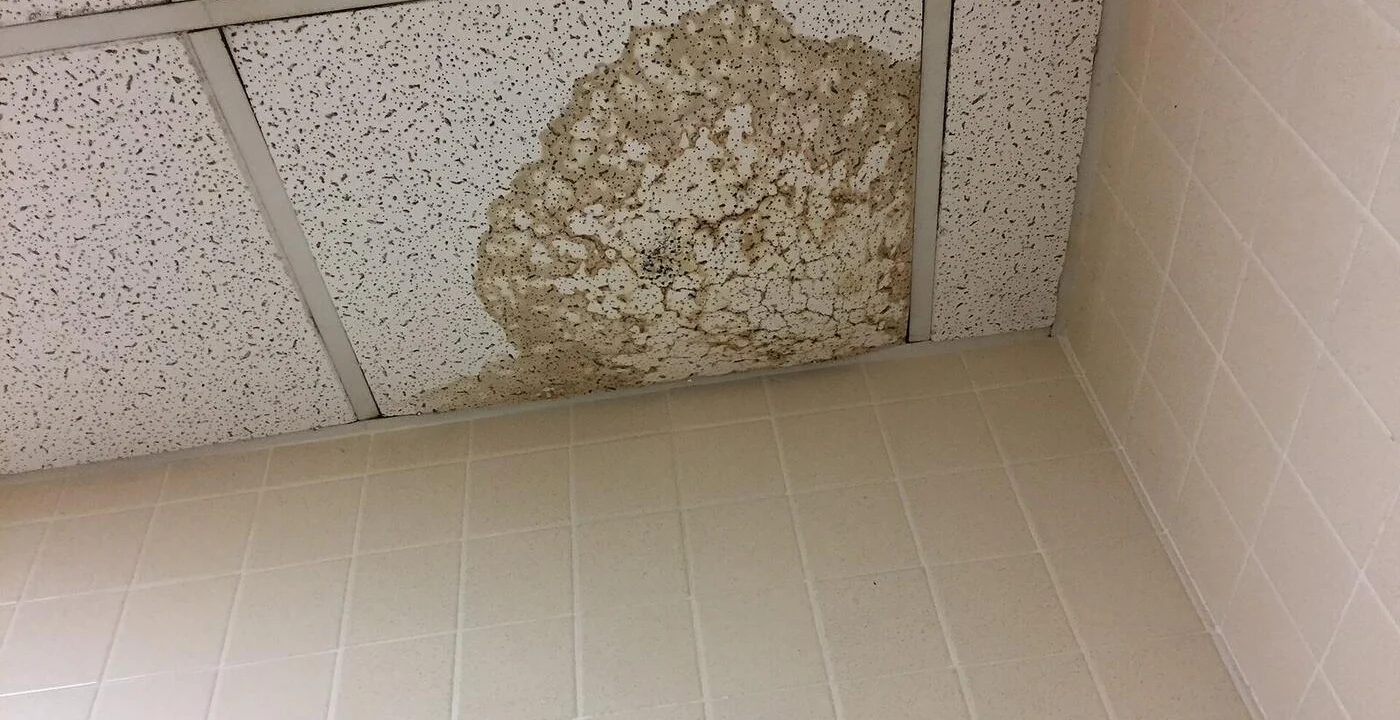
Key points at a glance
- Water that appears on your ceiling has usually travelled sideways along the underside of the slab first — the stain is rarely under the actual defect.
- Photograph, date and report the leak in writing on day one. Verbal complaints between neighbours leave no record when the argument reaches the committee.
- A defect inside the upper flat is normally the upper member’s cost; a structural or common-services defect is normally the society’s. Your registered bye-laws decide.
- Repainting your ceiling before the upstairs source is fixed guarantees you will be painting it again next monsoon.
- An independent written inspection report moves a housing society committee far faster than a complaint letter does.
A brown ring on the ceiling of a middle-floor flat is one of the most common — and most badly handled — problems in Pune and Pimpri-Chinchwad housing societies. Handled well it is a two-day repair. Handled badly it becomes eighteen months of correspondence, two repaints and a leak that is still there. Here is the sequence that works.
Step 1: the first twenty-four hours
- Photograph it with a date. Take a wide shot showing the room and a close shot showing the stain. Repeat weekly. A sequence of dated photographs is the single most useful thing you can hold.
- Kill the circuit if water is near a light point or fitting. Ceiling leaks and concealed wiring share the same slab.
- Inform the flat above in writing, politely, and copy the society. A message on the society group is fine; an email is better.
- Ask the society, in writing, for a joint inspection. Request that it be minuted.
- Do not repaint yet. The stain is your evidence and your progress indicator.
Step 2: work out where the water is actually coming from
There are only five realistic sources for water arriving on a middle-floor ceiling, and they need very different remedies:
| Source | Tell-tale behaviour | Whose defect it usually is |
|---|---|---|
| Failed bathroom waterproofing above | Wet after showers; worst under the upper bathroom footprint; continues in dry weather | The upper flat |
| Concealed plumbing leak above | Constant, unrelated to rain or shower timing; often a steady drip | The upper flat |
| Terrace or slab leak (top floor above) | Appears only during and after rain; dries between spells | The society |
| Common drainage or shaft line | Follows a shaft wall; smells; unrelated to rain | The society |
| Condensation, not a leak at all | Uniform damp film in cold months; no staining; no dripping | Ventilation, not repair |
Note the second row: a leak that carries on through a dry February is not a rain problem, and no amount of terrace waterproofing will touch it.
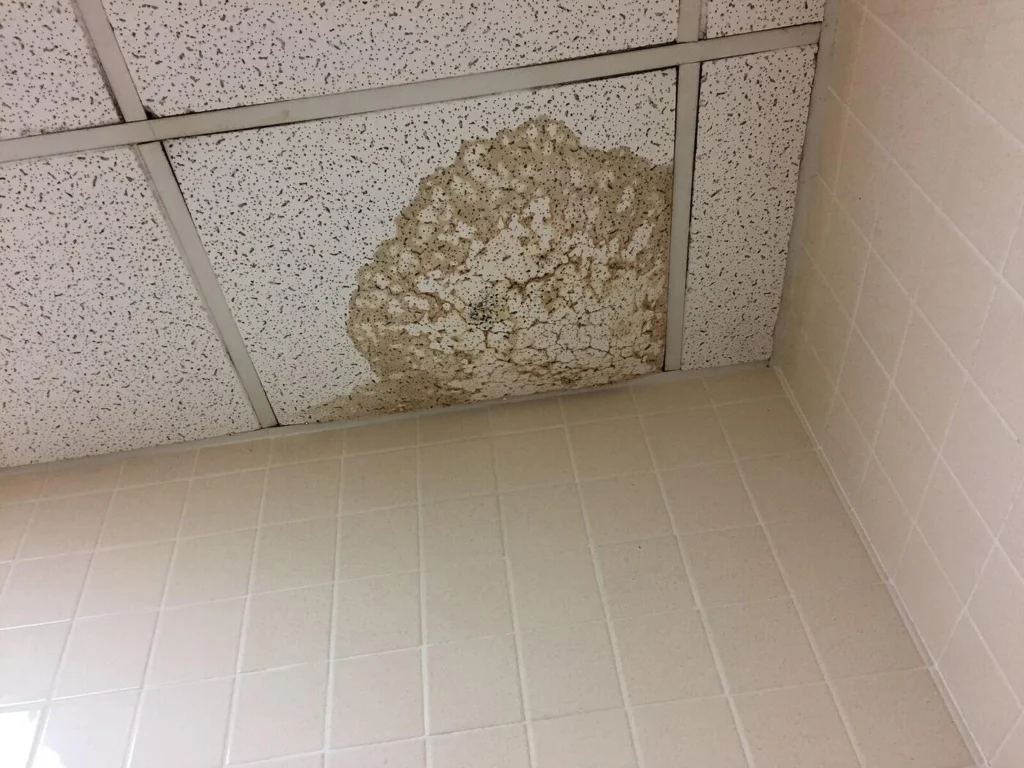
Need to prove where the water is coming from?
Step 3: get it traced, not guessed
The stain on your ceiling is where water finally dropped through, which is often a metre or more from where it entered the slab. Thermal imaging and moisture mapping locate the wet zone through the finish, without breaking anything, and produce something you can put in front of a committee. That report matters more than it sounds: a neighbour disputes an opinion, but very few people argue with a moisture map. Our guide to thermal leak detection explains what the survey can and cannot see.
Step 4: the repair, and the order it must happen in
- Fix the source. Upper bathroom sunk slab, upper plumbing line, terrace, or shaft — whichever the survey identified.
- Seal the path, if needed. Injection grouting from the underside closes the route water took through the slab or joint, and is done from your side without disturbing the flat above.
- Let the slab dry. A saturated RCC slab takes weeks, not days. Replastering a wet slab traps the moisture and the patch reappears.
- Then replaster and paint. Not before. This is the step everybody does first and regrets.
Ceiling dripping and the neighbour is not responding?
Leakproofs by Betterwork covers every part of Pune and Pimpri-Chinchwad. Talk to an engineer, not a call centre — describe the leak on the phone and we will tell you straight away whether it needs a site visit.
Call +91 96376 90999 → WhatsApp a Photo Try the Cost Calculator
Step 5: when the neighbour will not cooperate
- Keep everything in writing and keep it factual. Dates, photographs, and what was requested.
- Escalate to the managing committee formally, asking for the complaint to be minuted and for a decision on responsibility under the society’s bye-laws.
- Offer to share an independent survey. Paying for a report yourself often unblocks a stalemate faster than another round of letters, because it removes the disagreement about facts.
- Propose a joint repair. In practice, many Pune societies settle these by splitting the cost between the two members and the society, once the source is established.
If several flats are affected, treat it as a building problem
Two or three flats in the same vertical line with the same complaint is not three neighbour disputes — it is one building defect, and it is cheaper to solve as one job. Societies across Pune and PCMC usually address this through a single scoped contract rather than flat by flat. Our housing society waterproofing page covers how that is scoped, and this tender scope template is what committees use to get comparable quotations.
Leakproofs by Betterwork carries out independent leak-source surveys for individual members and for committees across Pune and Pimpri-Chinchwad, and issues a written report either way.
Frequently asked questions
Who pays for a ceiling leak coming from the flat above?
It depends on where the defect is. A defect inside the upper flat — its bathroom sunk slab, its plumbing — is normally the upper member’s responsibility. A defect in the structure or in common services, such as the terrace or a common drainage line, is normally the society’s. Your society’s registered bye-laws govern, so read them first.
What should I do first when water drips from my ceiling?
Photograph and date it, switch off the electrical circuit for that area if the water is near a fitting or light point, inform the upper flat and the society in writing the same day, and ask for a joint inspection. Do not start repairing your own ceiling yet.
Can a ceiling leak be repaired from below?
Sometimes. Injection grouting from the underside can seal a slab or a joint without touching the flat above. But if the source is failed bathroom waterproofing upstairs, treating only from below buys time rather than solving it.
How long does it take to fix a leak from the flat above?
Tracing and injection work is usually one to three days. A full sunk-slab treatment in the upper bathroom takes longer, and the ceiling below should be allowed to dry fully before it is replastered and painted.
Schedule a free site inspection in Pune or Pimpri-Chinchwad
Get the source identified in writing before the next monsoon. An engineer from Leakproofs by Betterwork visits at a time that suits you, deep-scans the affected area, traces where the water actually enters, and hands you a written report with a fixed price. Eligible completed work carries a written 10-year applicator warranty on the treated area, water-tested before the certificate is issued.
Related guides
9 Renovation Mistakes That Cause Leaks in Pune Homes
The nine ordinary interior renovation decisions that create leaks in Pune flats within a year, and the sequence that avoids…
Learn more
What Leaks at 5, 15 and 30 Years: A Building Age Timeline for Pune and PCMC
Buildings do not leak randomly. What fails at 5, 15 and 30 years in Pune and PCMC, what is still…
Learn more
Mould and Fungus After the Monsoon: Removing It So It Does Not Return
Why mould returns every Pune monsoon, how to tell condensation growth from leak growth, and the six-step removal sequence that…
Learn moreExplore related services and areas
Our services
- Terrace Waterproofing
- Roof Waterproofing
- Bathroom Waterproofing
- Wall Waterproofing
- Basement Waterproofing
- Water Tank Waterproofing
- Balcony Waterproofing
- Swimming Pool Waterproofing
Specialist treatments
- Terrace Waterproofing
- Bathroom & Toilet Waterproofing
- Basement & Underground Tank Waterproofing
- External & Internal Wall Leakage Treatment
- PU & Epoxy Coating Waterproofing
- Injection Grouting (Pressure / Chemical)
- Dampness & Seepage Treatment
- Monsoon Pre-Inspection & Leakage Detection