
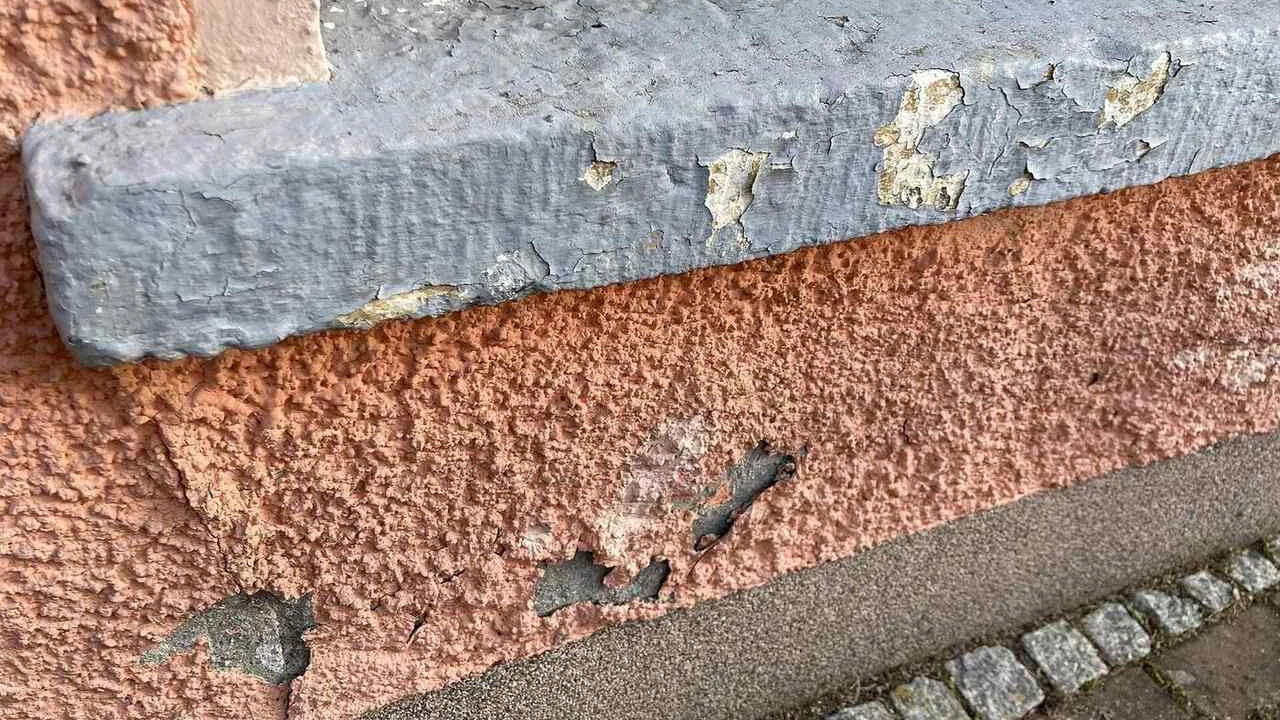
Key findings at a glance
- Rising damp holds a constant height and does not respond to rain; lateral seepage worsens within days of heavy rain.
- Condensation appears on cold surfaces in unventilated rooms, improves with ventilation, and is seasonal.
- Salt deposits concentrated at the top of a damp band are close to diagnostic of rising damp.
- Painting over any of the three without treating the source relocates the problem rather than solving it.
- The three have entirely different remedies, which is why the diagnosis has to come before the quotation.
Wall dampness in Pune has three common causes, and they are routinely confused — including by contractors, who will often quote for whichever one they are equipped to treat. The three need entirely different remedies, so getting the diagnosis right is the whole job. This is the decision tree we use on site, and most of it you can work through yourself.
The comparison
| Evidence | Rising damp | Lateral seepage | Condensation |
|---|---|---|---|
| Height on the wall | Constant, 600 mm – 1 m, horizontal tide mark | Any height; often mid-wall patches | Upper corners, behind furniture, whole cold surface |
| Response to rain | None | Worsens within 1 – 3 days | None |
| Seasonality | Year round, worse in monsoon | Monsoon and after | Cool months, closed rooms |
| Salt deposits | Heavy, concentrated at the top of the band | Possible, diffuse | None |
| Which walls | Ground floor only, any wall | External or shared walls | North-facing, external corners, thermal bridges |
| Response to ventilation | None | None | Improves markedly |
| Surface feel | Damp, cool, often salty to touch | Damp, cool | Water droplets or clammy film |
| Correct remedy | Injected damp-proof course, salt-resistant render | External repellent or coating, crack sealing | Ventilation, extraction, insulation, anti-mould finish |
Step one: does it respond to rain?
Note the extent of the damp patch on a dry week, photograph it against a fixed reference such as a socket or a skirting line, then check it again two days after sustained rain. If the patch grows, water is entering laterally from outside and the treatment is external: seal cracks, apply a breathable water repellent to the facade, check the parapet and any adjacent drainage. If it does not change, rain is not the mechanism and you move to step two.
Step two: does it respond to ventilation?
Keep the room ventilated for a week — windows open during the day, extraction used when cooking or bathing, no drying of clothes indoors. Condensation responds dramatically to this; the other two do not respond at all. Condensation also has a distinctive distribution: it prefers cold surfaces, so it shows in external corners, on north-facing walls, behind wardrobes pushed against external walls, and around concrete columns and beams that bridge to the outside.
Not sure what your property needs?
Book a free deep-scan inspection. We map the moisture, trace where the water actually enters, and give you a written report with a fixed estimate — at no cost and with no obligation.
Step three: where are the salts?
If neither rain nor ventilation changes anything, look closely at the top edge of the damp band. Rising damp draws groundwater up through the capillary structure of the masonry, carrying dissolved salts with it. The water evaporates at the top of the damp zone and the salts are deposited there, which is why rising damp characteristically shows a band of white crystalline deposit at a consistent height with clean wall above it. That horizontal tide mark at roughly 600 mm to 1 m, with salts at its upper edge, is close to diagnostic.
Why the wrong treatment is worse than none
Each of the three has a common wrong treatment that actively makes things worse. For condensation, sealing the room to keep the cold out reduces ventilation and increases the humidity that is causing it. For lateral seepage, applying a film-forming waterproof paint to the internal face traps water inside the wall, and it blisters. For rising damp, replastering with a dense cement render over salt-contaminated masonry pushes the evaporation zone higher and the tide mark simply reappears further up the wall a few months later.
What treating each one actually involves
Rising damp
A chemical damp-proof course is injected into a mortar bed at plinth level to cut the capillary path. Salt-contaminated plaster is removed to at least 500 mm above the visible damp and replaced with a salt-resistant render. Then the wall has to dry, which takes roughly a month per 25 mm of thickness — so a 230 mm wall may take most of a year to look right. That drying period is the part clients are least often told about and most often disappointed by.
Lateral seepage
Treatment is external. Cracks are cut and sealed, the facade is treated with a breathable silane-siloxane repellent or an elastomeric coating depending on condition, and any contributing detail — a failed parapet coping, a leaking downpipe, a planter against the wall — is corrected. Internal treatment alone does not address a wall that is being wetted from outside.
Condensation
This is a building physics problem, not a waterproofing one, and an honest contractor will say so. The remedies are ventilation and extraction, reducing internal moisture generation, and where practical insulating the cold surface so it stays above dew point. An anti-mould finish deals with the visible consequence but not the cause.
Not sure which of the three you have?
Frequently asked questions
Rising damp or seepage — how do I tell?
Rising damp holds a constant height and ignores rain, with salts at the top of the band. Seepage worsens within days of heavy rain and can appear at any height.
Why does damp appear only in winter?
That is condensation. It shows on cold surfaces in closed rooms and improves markedly with ventilation.
Will waterproof paint fix it?
Rarely, and on an internal face it usually makes things worse by trapping moisture. Treat the source, from outside where the source is outside.
Book your free waterproofing inspection
Leakproofs by Betterwork works across Pune and Pimpri-Chinchwad. An engineer visits at a time that suits you, deep-scans the affected area, and hands you a written report and fixed price. Eligible work carries a 10-year warranty.
Related guides

What Leaks at 5, 15 and 30 Years: A Building Age Timeline for Pune and PCMC
Buildings do not leak randomly. What fails at 5, 15 and 30 years in Pune and PCMC, what is still…
Learn more
Mould and Fungus After the Monsoon: Removing It So It Does Not Return
Why mould returns every Pune monsoon, how to tell condensation growth from leak growth, and the six-step removal sequence that…
Learn more
Ceiling Leak from the Flat Above: Who Pays, and How to Get It Fixed
Water dripping from the flat above? How to trace the real source, what your society bye-laws say about who pays,…
Learn moreExplore related services and areas
Our services
- Terrace Waterproofing
- Roof Waterproofing
- Bathroom Waterproofing
- Wall Waterproofing
- Basement Waterproofing
- Water Tank Waterproofing
- Balcony Waterproofing
- Swimming Pool Waterproofing
Specialist treatments
- Terrace Waterproofing
- Bathroom & Toilet Waterproofing
- Basement & Underground Tank Waterproofing
- External & Internal Wall Leakage Treatment
- PU & Epoxy Coating Waterproofing
- Injection Grouting (Pressure / Chemical)
- Dampness & Seepage Treatment
- Monsoon Pre-Inspection & Leakage Detection